Word Tiles - Word Puzzle Game
HypervationWord
4.39.00 Reviews
- Version
- 0.1.1
- Installs
- 10.00K
- Age Rating
- Everyone
Screenshots
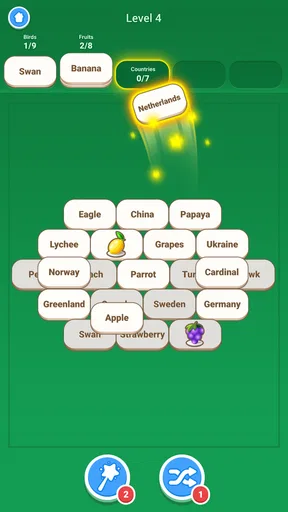
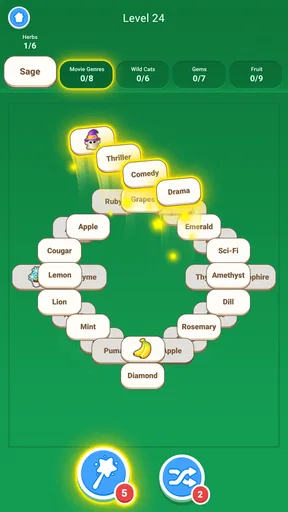
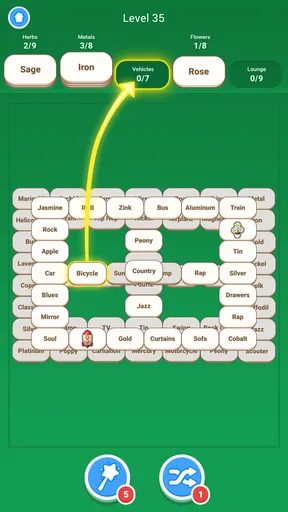
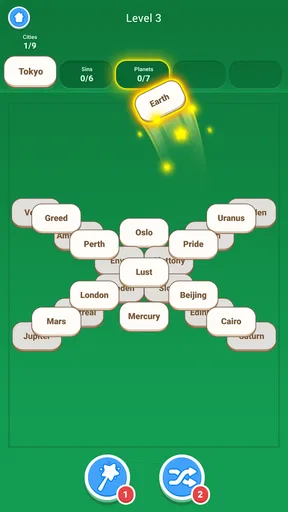
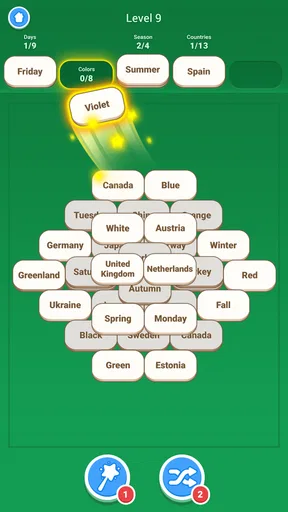
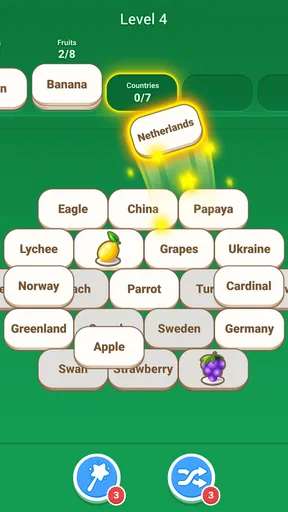
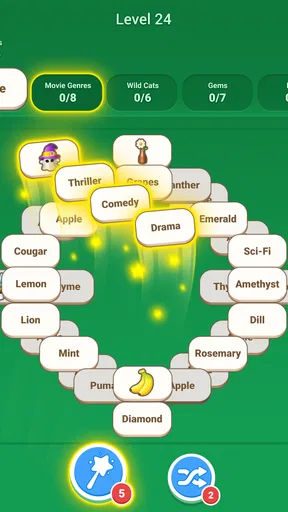
Our Review of Word Tiles - Word Puzzle Game
 Analysis by Appyee
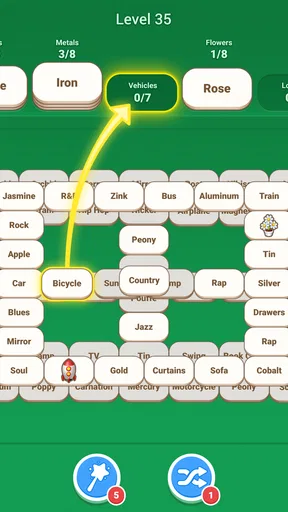
I spent time with Word Tiles - Word Puzzle Game as a compact word-and-logic challenge, and my first impression was easy to understand: it asks me to look at a collection of words, spot relationships between them, and arrange them into meaningful groups. That sounds simple, but the appeal comes from the gap between recognizing individual words and correctly identifying the connection that binds them together.
Developed by Hypervation, this free word game is aimed at players who enjoy short reasoning sessions rather than long stories, reflex-based action, or complicated controls. It is rated for Everyone, so its basic concept is approachable for a broad audience. The current version is 0.1.1, and the game requires Android 6.0 or later. Those details make it feel like an accessible title to try on an older compatible device, especially if I want a puzzle that can be opened without committing to a large download or a lengthy learning process.
How the word-grouping idea works in practice
The central task is to connect words by category. The important distinction is that the answer is not always the most obvious shared meaning. A word may appear to belong with several others, and that is where the logic element becomes more important than simple vocabulary recognition. I found myself testing possible relationships, rejecting groups that were technically plausible but incomplete, and looking for the one interpretation that made the whole set feel deliberate.
That structure gives the game a different rhythm from a traditional crossword. A crossword usually guides me with a grid and clues, while a word search focuses on locating hidden terms. Here, the challenge is classification. I am not primarily asking, “What word fits this clue?” I am asking, “Which words belong together, and what kind of connection am I missing?” That change makes each move feel more like sorting evidence than filling blanks.
The short description presents it as “Word Tiles,” but the more useful way to think about it is a category-recognition puzzle. The title tells me the visual language of the game, while the actual mental work comes from grouping. Players who enjoy making lists, finding patterns, or debating whether two ideas genuinely share a category will understand the attraction quickly.
I also like that this format can create a natural pause before every decision. In a fast arcade game, hesitation is usually a mistake. In this one, hesitation is part of the process. I can scan the available words, form a tentative group, and then deliberately search for a stronger alternative. That makes it suitable for a quiet break, a commute, or a few minutes before bed when I want something active enough to hold my attention but not demanding constant speed.
The real difficulty is managing misleading connections
The strongest puzzles in this format are not difficult because the words are obscure. They are difficult because several words can be connected in different ways. A term might fit a broad theme, a phrase, an object type, or a familiar expression. If I commit too early, I can build a group that looks convincing while accidentally leaving the remaining words impossible to organize.
My practical advice is to avoid treating the first recognizable pattern as the answer. I get better results by identifying a possible group, then checking whether its category is precise enough. “Things related to travel” is usually weaker than a narrower relationship that explains every selected word without stretching the definition. This habit is useful beyond the game: it trains me to distinguish a genuine pattern from a loose association.
Another helpful approach is to start with the most specific connection rather than the most familiar word. If one cluster shares an unusually clear relationship, I use it as an anchor and reassess the rest. This reduces the chance of spending too long defending a broad interpretation. It also turns the puzzle into a process of elimination, which is often more reliable than trying to solve the entire board at once.
When I feel stuck, I do not repeatedly stare at the same two or three words. I mentally reset and inspect the full set again. A word that seemed unimportant may become the key once a tempting but incorrect group is removed from consideration. That reset is one of the most useful skills for this type of game, and it is a reason the experience feels more thoughtful than a basic word-matching exercise.
Why the free price matters to the decision
The game is free, which changes how I judge it. I do not need to compare an upfront purchase with another premium puzzle or calculate whether a one-time payment is justified. The sensible value question is simpler: does it provide enough enjoyable thinking to deserve a place on my phone? For a free title, the barrier to trying it is low, and that makes experimentation reasonable.
I would still separate free access from guaranteed long-term value. A free game can be worthwhile for occasional sessions even if it does not become a daily habit. In my case, the category-grouping format has value when I want a focused mental exercise, especially because it asks for interpretation rather than rapid tapping. Someone looking for an expansive puzzle campaign may judge it differently, but that is not a problem with the price; it is a matter of matching expectations to the format.
The public response is encouraging without being overwhelming: the game has an average rating of 4.3 from around 47 ratings, with about 9 written reviews. It has also passed 10 thousand installs. I read those figures as signs of early interest rather than a definitive verdict. They suggest that other players have found the concept appealing, but the relatively modest sample means I would rely more on my own reaction to the grouping mechanic than on the rating alone.
For me, the best value comes from the fact that I can try it without paying and quickly decide whether this particular kind of word logic suits me. If I enjoy the first few rounds, the free entry makes continuing an easy choice. If I dislike category ambiguity, there is no financial loss in moving on to a crossword, an anagram game, or another style of puzzle that gives clearer clues.
Where it fits among familiar word games
Compared with crosswords, this game feels less dependent on clue-writing conventions. Crosswords reward knowledge, spelling, and the ability to interpret a specific clue in a fixed space. Word Tiles instead makes me compare several terms at the same time. I have more freedom at the beginning, but that freedom also means I can follow a false lead more easily.
Compared with anagrams, it is less about rearranging letters and more about understanding meaning. An anagram game can be satisfying when I enjoy manipulating word forms, while this one suits me better when I want to identify relationships between complete words. Players who prefer a clear, mechanical route to an answer may find anagrams more comfortable.
Compared with a word search, the game offers less visual scanning and more interpretation. A word search rewards patience and attention to letter patterns. Here, finding the words is not the main event; understanding why they belong together is. That makes it a better fit for someone who likes semantic puzzles, but a weaker choice for anyone wanting a relaxing activity with little risk of second-guessing.
It also differs from trivia games. Trivia asks whether I know a fact, while category grouping can be solved through reasoning even when I do not have specialized knowledge. That is a useful strength. I can approach a puzzle by examining language and relationships rather than depending entirely on memory. The trade-off is that the answer can feel subjective until the category becomes clear, whereas a trivia question usually has a more direct right-or-wrong structure.
Small habits that make the experience better
I found three habits especially useful. First, I separate words into “nearly certain,” “possible,” and “unexplained” groups instead of locking in every early idea. This keeps a promising connection available without allowing it to dominate my thinking. It is a simple way to preserve flexibility when several categories overlap.
Second, I look for the category that explains the words most evenly. If one word only fits after a long explanation, I treat that as a warning. A strong group should feel natural when viewed as a whole. This prevents me from confusing a clever personal association with the intended relationship.
Third, I use the remaining words as a test of every proposed solution. A group is not truly convincing if it leaves behind a confusing collection that cannot form another coherent set. This whole-board check is more effective than judging each group in isolation, and it is the main strategic difference between casual guessing and deliberate solving.
These habits also make the game useful for shared play. I can show a puzzle to a friend or family member and compare interpretations without needing a complicated multiplayer system. One person may notice a phrase-based connection while another sees a category based on objects or concepts. The conversation becomes part of the entertainment, although players who prefer solitary, fully controlled challenges may not care about that social angle.
Everyday situations where it works well
A realistic use case for me is a short waiting period when I have enough attention for a puzzle but not enough time for a full game session. I can open it, inspect the words, and work through a small reasoning problem instead of automatically scrolling through social feeds. The format is especially suitable when I want mental stimulation without sound, rapid movement, or a story that I might forget after stopping.
It can also work as a gentle family activity because the Everyone rating and familiar word-based premise make the concept easy to explain. A parent and child could discuss possible categories, while an adult group might enjoy arguing over whether a connection is precise or merely clever. The best shared experience would depend on the puzzle being understandable to everyone involved; players with very different vocabularies may not find every challenge equally comfortable.
For language learners, I would treat it as supplementary practice rather than a dedicated study tool. Grouping words by meaning can reinforce vocabulary relationships, but the game is still designed for solving, not for structured lessons, pronunciation, or grammar instruction. Someone learning English would benefit most if they already understand enough of the words to reason about their connections. Beginners may find the ambiguity frustrating rather than educational.
I would not choose it for a long flight if I wanted a deep progression system, a rich narrative, or a large collection of clearly signposted modes. Its appeal is concentrated in the core act of grouping. That focus is a strength for quick sessions, but it may feel narrow to players who expect a puzzle app to offer many different activities.
The friction points I noticed
The same ambiguity that makes a good puzzle satisfying can also make a weak moment feel unfair. When several words share a broad theme, I may understand the intended category only after trying an alternative. That is not automatically a design flaw, but it means my enjoyment depends heavily on how cleanly each group is defined. Players who dislike answers that require interpretation should approach cautiously.
The early version number, 0.1.1, also sets an expectation of a developing product rather than a mature, fully established word platform. I would not treat that as a negative by itself, but I would keep my expectations focused on the current puzzle concept. The game’s present appeal comes from its basic grouping challenge, not from an assumed list of future additions or improvements.
The audience size is still relatively small compared with major word-game brands. Around 10 thousand installs is enough to show that people are trying it, and the 4.3 average is a positive signal, but neither figure guarantees that it will match every player’s preferred difficulty or pacing. I would use the free price to test it directly rather than deciding solely from popularity.
Another trade-off is that the game is mentally active in a particular way. It is not ideal when I want to switch off completely. Even a short session can require sustained concentration, especially when the words invite multiple interpretations. That makes it more rewarding for an alert break than for a tired moment when I only want effortless entertainment.
I also think the game is less suitable for players who need a strong sense of progression to stay motivated. A category puzzle can be satisfying one board at a time, but the enjoyment comes from solving the immediate problem. If my priority is collecting characters, building a long-term profile, competing through extensive rankings, or following a narrative, I would look toward a different type of app instead of expecting this focused word format to provide those things.
Who should try it, and who should skip it
I would recommend giving it a chance if you enjoy semantic puzzles, pattern recognition, and the moment when several unrelated-looking words suddenly make sense together. It is particularly well suited to people who like discussing why an answer works, not just entering it. The free price makes the trial decision straightforward, and the Everyone rating keeps the concept broadly approachable.
It is also a good candidate for occasional players who want a small reasoning activity on an Android device running version 6.0 or later. The technical requirement is modest enough to include older compatible phones, which is useful if I do not want to reserve this kind of game for my newest device. The developer, Hypervation, has kept the identity of the experience centered on words and categories rather than making it dependent on a more elaborate genre.
I would skip it if I mainly want spelling practice, vocabulary lessons, or a conventional crossword layout. Those alternatives provide a clearer match for those goals. I would also skip it if ambiguous categories make me feel annoyed rather than curious. No amount of free access changes the fact that the central mechanic asks me to tolerate uncertainty and reconsider my first interpretation.
Players who want a competitive, high-speed challenge may be happier with timed word games. Players who want calm, repetitive searching may prefer a word-search title. Word Tiles makes the most sense for the middle ground: a quiet but active puzzle where the main reward is understanding the connection between terms.
My buying decision and final recommendation
Because the game is free, my verdict is an easy try rather than a purchase recommendation. I would install it when I want a category-based word puzzle and judge it by whether the ambiguity feels engaging. There is no paid entry point to justify, so the practical question is whether the core loop earns repeat attention. In my experience, it does when I am in the mood to reason carefully and challenge my first assumptions.
I would keep it as a lightweight option rather than make it my only word game. Crosswords remain better for clue-solving and grid satisfaction, anagrams are better for letter manipulation, and word searches are better for relaxed visual scanning. This game earns its place by offering a different mental task: sorting language into meaningful structures while checking that the entire arrangement holds together.
The rating of 4.3 and the early community of over 10 thousand installs give it a promising starting point, but the limited number of ratings means I would avoid treating those figures as proof of universal appeal. The more honest conclusion is that the concept has enough interest to deserve a personal test, especially since access is free and the age rating is Everyone.
My recommendation is to try it if you enjoy finding precise connections between words, and to skip it if you want direct clues, fast action, or a broad collection of modes. It is a focused word-logic game from Hypervation, currently at version 0.1.1, with a clear idea and a useful amount of mental friction. That focused design will not suit everyone, but for the right player, a few carefully grouped words can make a surprisingly satisfying break.
Verdict
Strengths of Word Tiles - Word Puzzle Game
- Simple tile-swiping controls are easy to learn.
- Short levels make it suitable for quick breaks.
- Word challenges can help improve spelling and vocabulary.
- Clean visuals keep the board easy to read.
- Progression provides a steady sense of achievement.
Limitations of Word Tiles - Word Puzzle Game
- Some puzzles may feel repetitive after extended play.
- Difficulty can vary noticeably between consecutive levels.
- Hints may be limited or require watching advertisements.
- Small tiles can be harder to select on compact screens.
- Offline availability may vary depending on the game version.
Similar Picks in This Category
View All
Word Search - Word Puzzle Game
Bluetile4.8

Word Search Quest - Puzzles
Blackout Lab4.8

CodyCross: Crossword Puzzles
Fanatee, Inc.4.7

Words of Wonders: Crossword
Fugo Games4.9

Wordscapes: Word puzzle game
PeopleFun4.7

Word Search Explorer
PlaySimple Games4.9
Frequently Asked Questions
What is Word Tiles - Word Puzzle Game?
Word Tiles - Word Puzzle Game is a casual word game in which you arrange or connect letter tiles to form valid words and complete level-based challenges. It is designed for short play sessions, making it suitable for relaxing at home, during a commute, or whenever you want to exercise your vocabulary and spelling skills without committing to a long gaming session.
How does the gameplay in Word Tiles work?
The main gameplay revolves around examining the available letter tiles and using them to create the word or words requested by each puzzle. As you progress, levels may become more difficult by introducing longer answers, less familiar vocabulary, limited tile arrangements, or additional objectives. The straightforward controls are generally easy to understand, although solving later puzzles can require patience and careful planning.
Can Word Tiles be played offline?
Many of the core puzzles in Word Tiles can typically be enjoyed without a continuous internet connection, which is convenient for travel or areas with unreliable service. However, certain features may still require internet access, including advertisements, cloud synchronization, updates, leaderboards, special events, or in-app purchases. It is worth testing the game offline after installation to confirm which functions remain available.
Does Word Tiles contain ads or in-app purchases?
Word Tiles - Word Puzzle Game may use advertising as part of its free-to-play model, and ads can appear between levels or when you request optional rewards such as hints. Depending on the version available on your device, there may also be in-app purchases for removing advertisements, obtaining coins, or unlocking assistance. Review the store listing and purchase settings before downloading, especially on shared devices.
Is Word Tiles suitable for children and beginners?
Word Tiles is generally approachable for beginners because its rules are simple, the controls are easy to learn, and early levels usually introduce the word-building concept gradually. It can also support spelling and vocabulary practice, although difficulty and word selection vary by level and language. Parents should still check the app’s age rating, advertising, privacy information, and purchase protections before allowing children to play.
Play our best games!


